
#12 The Comox Valley
James Lovelock and Gaia Theory

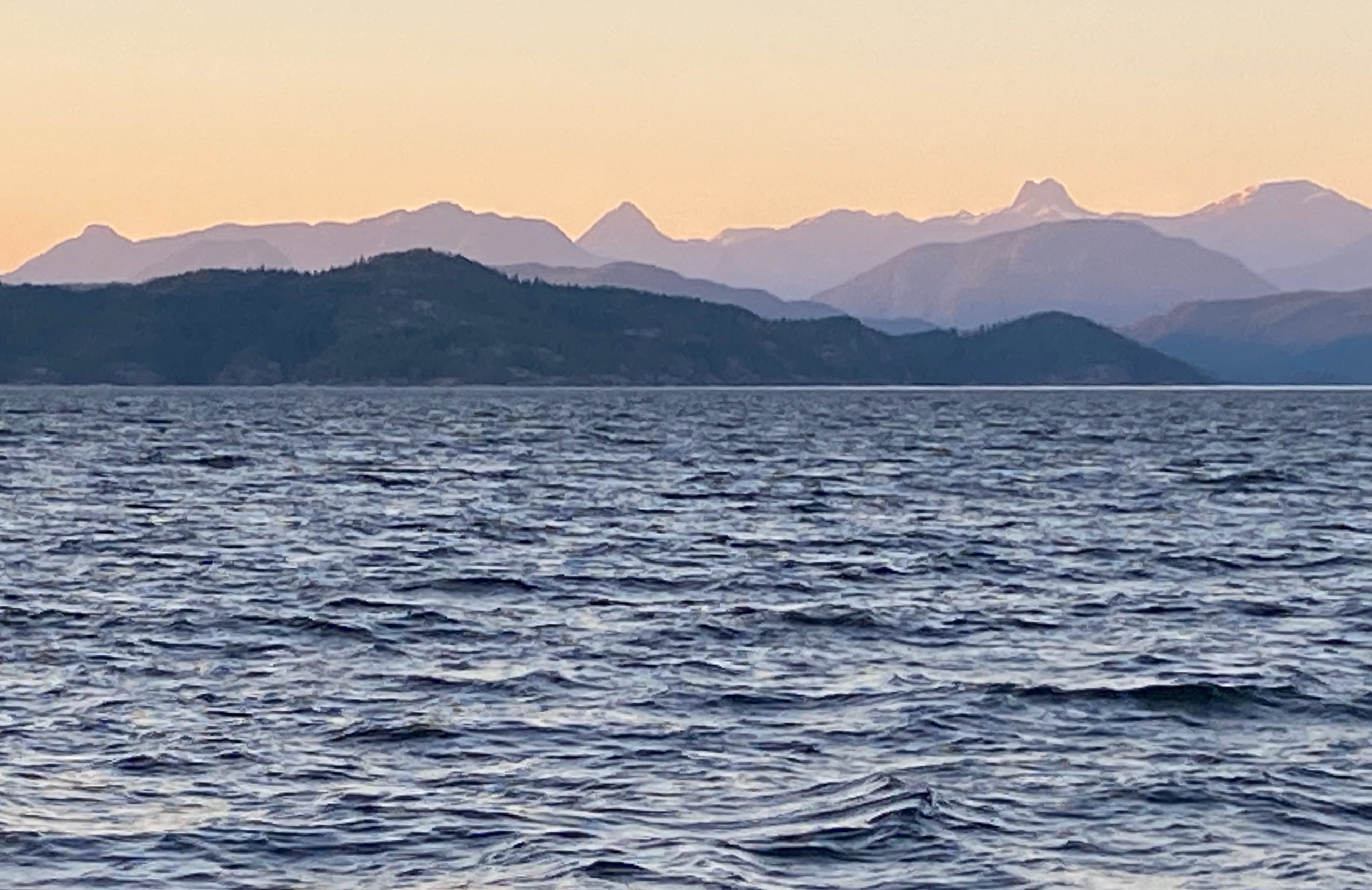
The Comox Valley - a rich agricultural plain - lies along the north-central mainland facing coast of Vancouver Island, over 225 km north-west of the city of Victoria. A warm temperate climate, spectacular scenery, and bucolic lakes, small and mid-size towns, including Comox and Courtenay, Campbell River, Cumberland, each with farmers’ markets, year round festivals and culture make this area seem a year round paradise. The charming Comox main street, its harbor and boat marinas, and the twin town of Courtenay are all close by to my temporary residence, as are many parks with walking trails through pines and ferns, many coastal trails and short drives to provincial parks among the snowcapped mountains that form the backdrop to the valley. The weather has been balmy - warm days, blue skies after morning mist, and cool nights. The waters are calm enough for kayaking and stand-up paddle-boarding; the breezes are mild enough for a beginner like me to be comfortable during a preliminary sailing lesson on a Hobie Catamaran from my Australian friend John, a long-time sailor, who has joined me for this part of my journey; the seals are either curious or lazy enough to hang around, though their eyes carefully follow our movements when we come close.
It is tempting to think that perhaps the world isn’t teetering on the edge of irretrievable environmental catastrophe, that democracy isn’t failing. Tempting to think/hope that our scientific, sociological, ethical, economic and even political institutions and the tireless heroes and heroines who are working at the “grassroots” level are well on the way to undoing the damage, alleviating the suffering, restoring a sustainable world for all. In the midst of what surely could be called a summer paradise, the reality, however, is unavoidable.
The spectacular sunset that we saw during the evening whale watching cruise from Campbell River Discovery Dock, was an ominous reminder. The stunning beauty of sea, islands, mountains - painted in washes of layered purples, pinks, orange - felt almost apocalyptic - a world on fire just beyond the horizon - fires raging in mainland BC, in Alberta, in Alaska, in California, in Yellowstone, in Portugal, in Spain, in Greece, in London. The words noticed in the Guardian last week: if the winds had been different it would have been a “second fire of London”, rather than only forty-one homes destroyed by fire during the record heat. But here in the dark purple night waters among the Discovery Islands of the Inside Passage between north-central Vancouver Island and mainland British Columbia, the humpback whales still snorted, breached and went about their business, the tide still stirred the narrows of the Discovery Channel, the gulls still fought for scraps in the marina and the patient seals waited among them to pounce and dive for the larger share.
Josh, the owner of Eagle Eye Adventures, the whale watching and wildlife touring company based in Campbell River, a former implant dentist in Holland, relocated here, trained as a marine biologist and developed the company which runs tours six months of the year. He studies and photographs wildlife the rest of the year. Conversations during our tour inevitably turned to the ravages of climate change on the wildlife and environment, to the fires and smoke pollution. In fact, despite the slow bucolic summer pace of life evident in the many parks and beaches, most conversations I have had with locals include the topic of the mismanagement of our environment and its deadly consequences.
An example was when we met L. as she picked wild berries along a shady path. This last week of July brought a heat wave to the Pacific Northwest, with temperatures reaching an uncomfortable 91F here in Comox. One morning we set out early on foot before the worst heat, hoping to find our way through to a rocky beach on the north side of the Comox bluff, but, taking a wrong turn, we found ourselves on a narrow path between wild berries, where L. was picking thimble berries. An athletic 75 year old, she is also a transplant, having moved to this region from the western USA, after a life time of sailing, hiking, kayaking over much of the world. She spoke of the rise of invasive species exacerbated by climate change, and showed us the invasive blackberry which was rapidly outcompeting native berries such as the little black raspberry and the thimbleberry, which she was picking. Our conversation expanded to rabbits and cane-toads in Australia, lion-fish in the waters of Florida and the Caribbean sea, Scotch Broom - the yellow flowering invasive destroying ecosystem balance in much of the Pacific Northwest. She spoke also of the importance to her of the access to nature, mountains and sea that this area afforded.
The dangers of climate change and of the delay in taking the urgently need restorative steps, come up in almost every conversation I have. When I met a woman at the annual Comox Valley Market Day who was one of the seniors who joined the Fairy Creek Old Growth Forest logging protests of a year ago - our conversation inevitably was about climate change and climate activism. For more about the Fairy Creek blockade, check The Narwhal article. https://thenarwhal.ca/topics/fairy-creek-blockade/
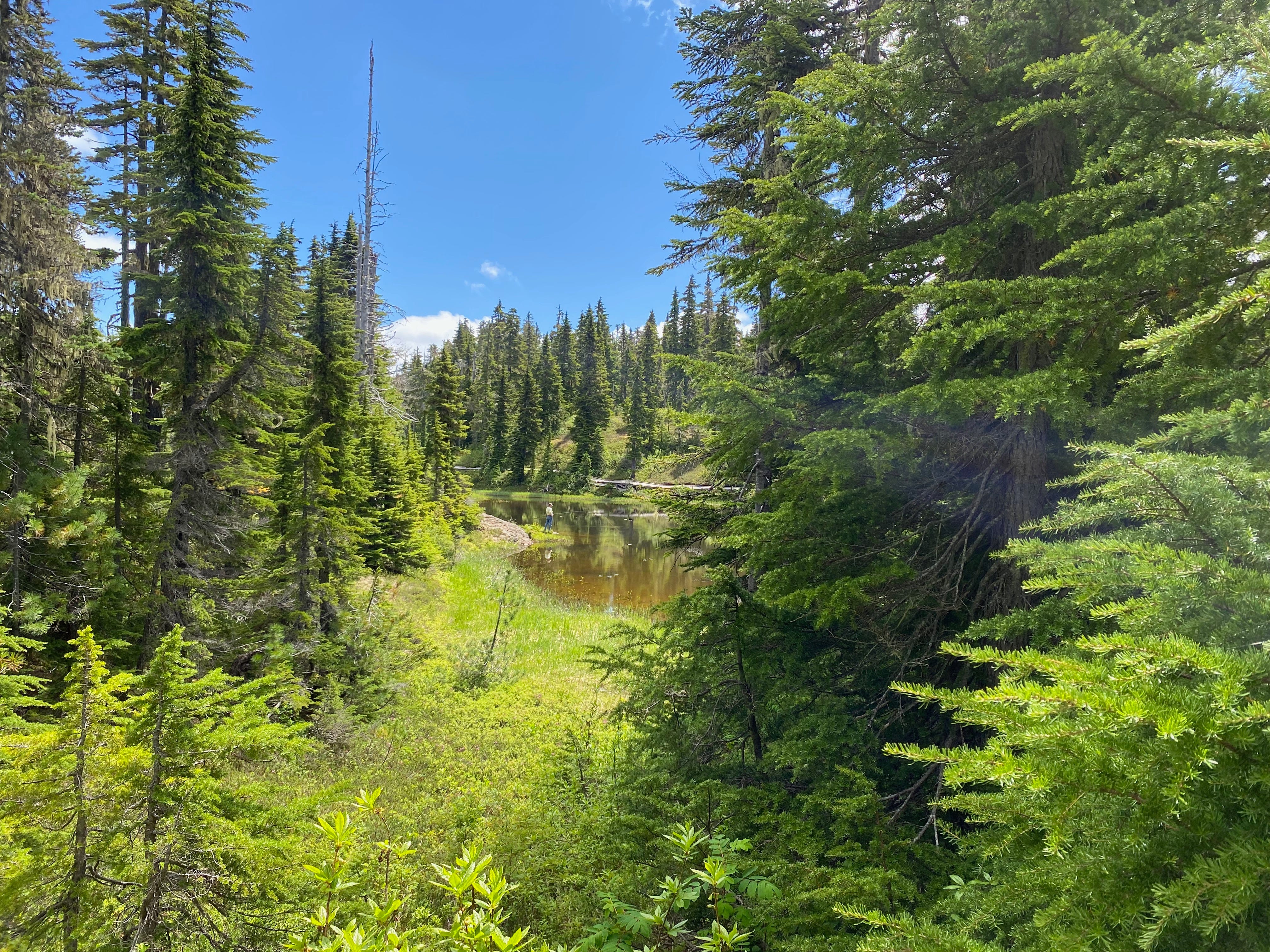
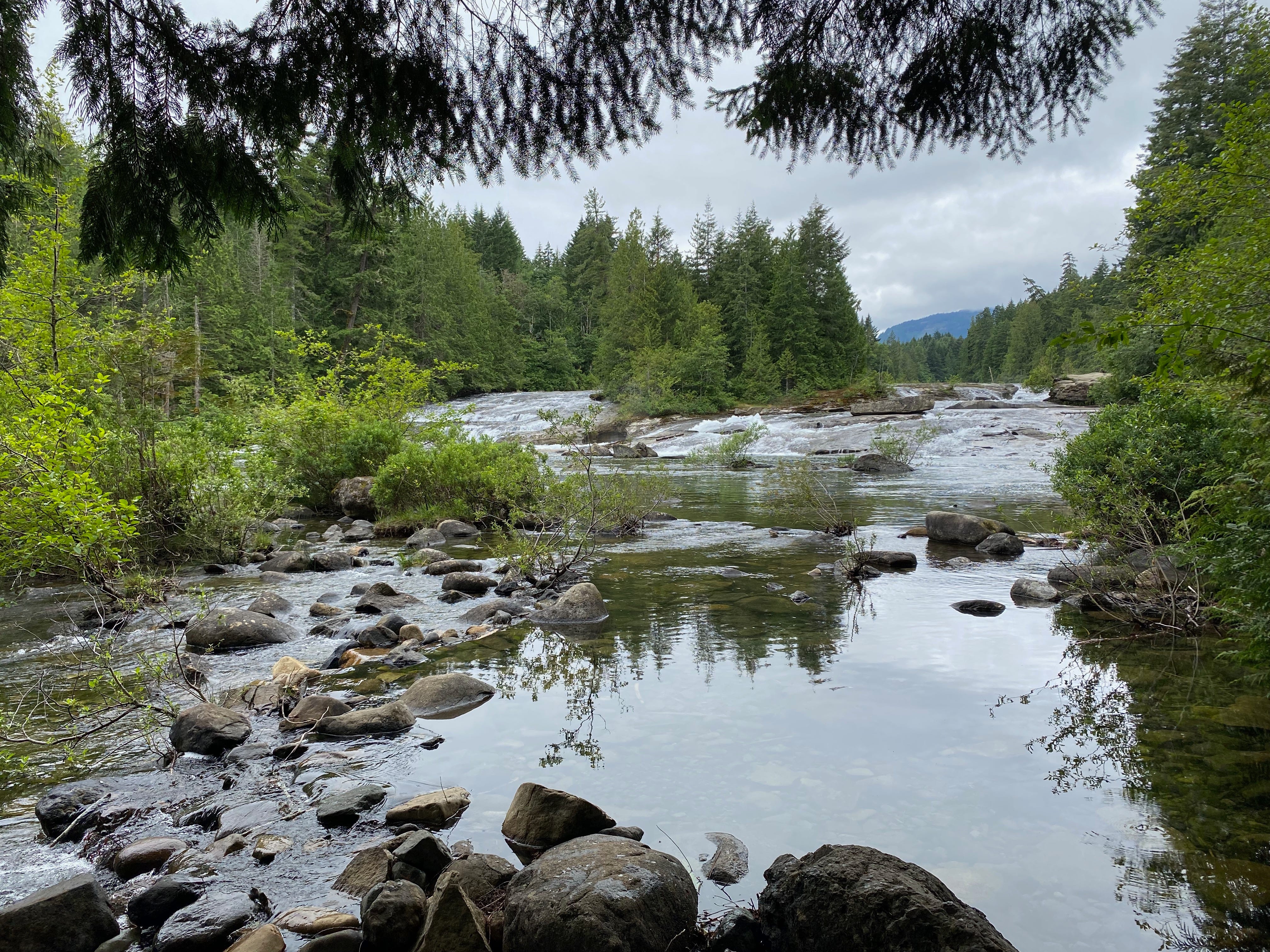
There are many beautiful places to visit - most of them scarred by the long history of extensive logging on Vancouver Island. Even the beautiful views of alpine lakes and tarns amidst second or third growth forest, seen from walking trails in Strathcona Provincial Park, generally have bare clearcut mountain sides in the far background. Access to some of the rivers and lakes is blocked on weekdays by logging operations. The beauty of the full waterfalls, rushing rivers and pools in which locals gather to cool off from the summer heat, is at the cost of massive snow melt and glacier melt. In the time I have been here the mountains that form the backdrop of the Comox Valley, have visibly lost much snow, leaving a much smaller summer snow cover than is previously normal.
James Lovelock, known for his Gaia Theory, died last week on his 103rd birthday. To read the various obituaries is to be astonished at the breadth of his life-work, his many roles and inventions. His vision of the Earth as a self-regulating wholistic system is surely a vital key to a possible sustainable future, one that urgently calls for a philosophical paradigm shift in how most of our political, economic and social systems, even our scientific systems, still view our position in this world. We learn more every day about the non-linearity, the lack of predictability of the reverberating impacts of any one change wrought by the heating up of the Earth systems. And we don’t fully understand how the Gaia system can deal with the damaging impact to its regulatory mechanisms that human industrialization has brought. Lovelock (according to Jonathan Watts in the July 29th Guardian) suspected that the current pandemic or the next might be part of such a recalibration, by lessening the human population and hence impact.
And yet, the glories of nature are still here, are celebrated by the people of this place as in the Filberg Festival yesterday, featuring many local artists, artisans celebrating in their work in many media - the true beauty of the Pacific Northwest.